


“Ashanti Twi: Kum apem a, apem beba”, which means “If you kill a thousand, a thousand more will come”, depicting the never-say-die and resilient attributes of the warriors of the ancient Ashanti Kingdom in the modern day Ghana.
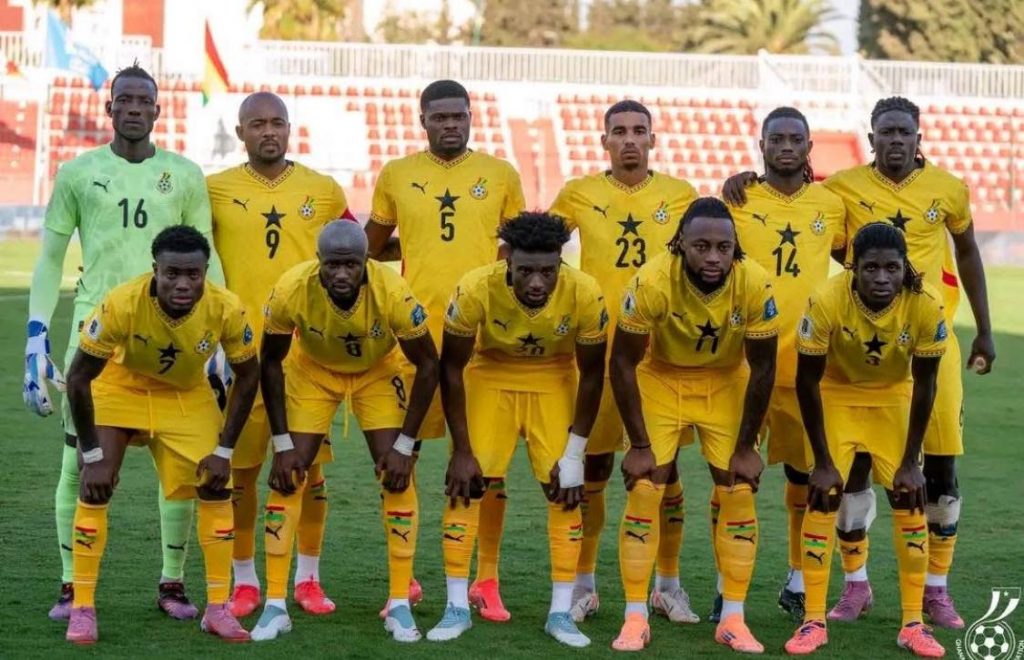
After the shock exit of Ghana from the 2025 Africa Cup of Nations qualifiers last year November, Jordan Ayew like the army generals of the great ancient Ashanti dynasty led the battle for the 2026 FIFA World Cup qualification from the frontline as the captain.
The hope of the whole football crazy Ghanaians rested on his shoulders and he didn’t disappoint. He was the talisman of the team with seven crucial goals that propelled Ghana to the Mundial.
When the referee blew the final whistle in Accra Sports Stadium last night after Mohammed Kudus’ 47th minute effort against Comoros officially secured the expected ticket of the Black Stars, the whole nation erupted into joyous rage.
The Ayews continue to bring joy to the door steps of football-loving Ghanaians.
Jordan inherited the captainship band from his elder brother, André who led the national team to the last World Cup in Qatar too. André Ayew has since retired from international football.
Though their father, Abedi Pelé could not fulfil his biggest career dream of playing at the football’s highest level- the FIFA World Cup- but he did gift Ghana Ibrahim, André and Jordan, his three sons. The eldest, Ibrahim Ayew, played for Ghana seven times and he was a part of the iconic squad that almost led the nation to a historic FIFA World Cup semi-final in 2010, only to crash out painfully at the last step to Uruguay.

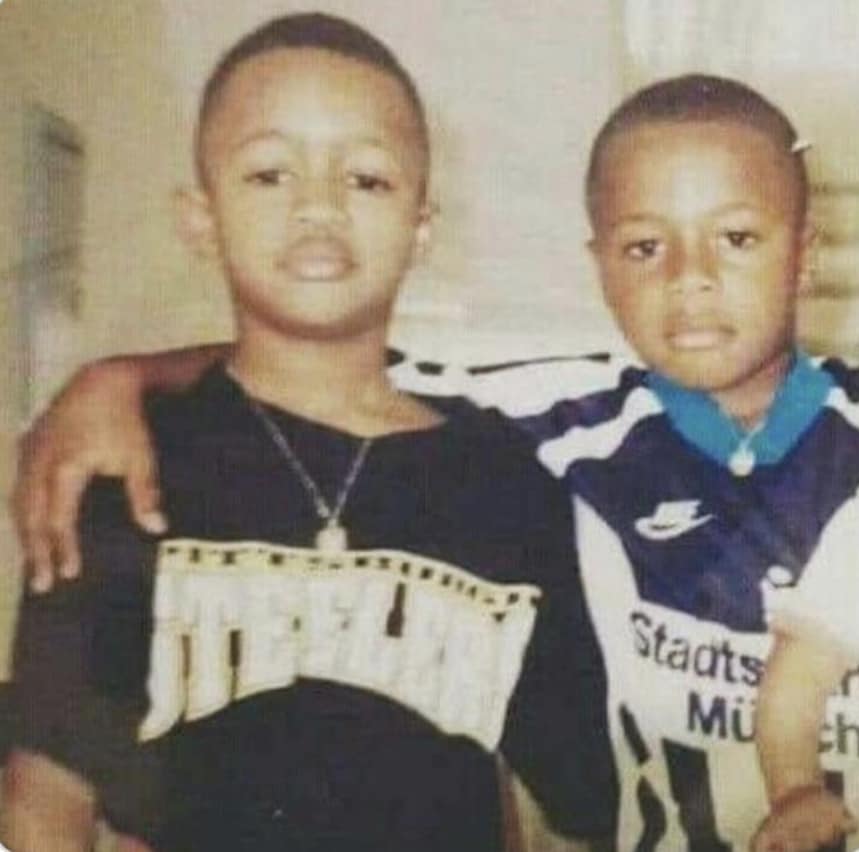
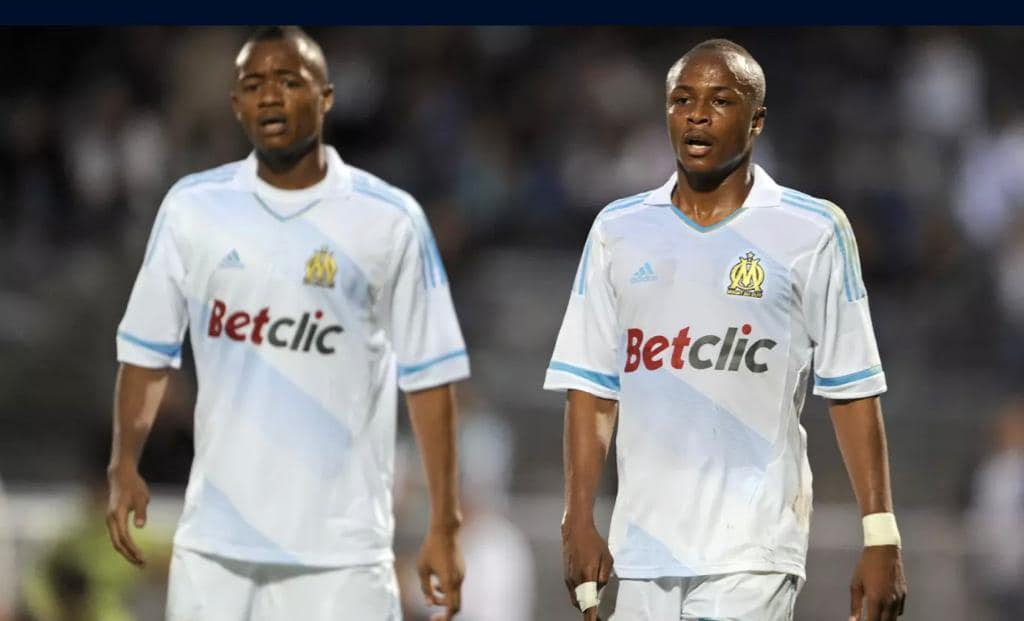
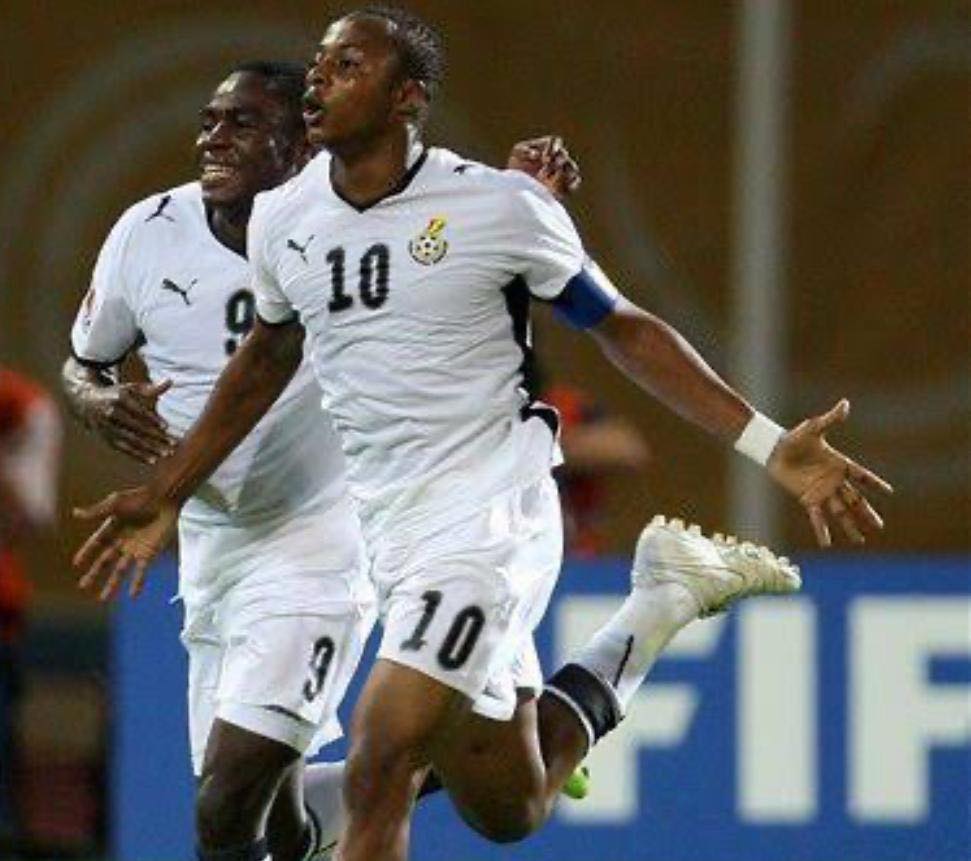
André Ayew was also the captain of the Ghanaian youth side that made history in 2009 when the Black Satellites won the FIFA U-20 World Cup in Egypt, the first and the only FIFA world youth championship title of any African side till date since 1977.
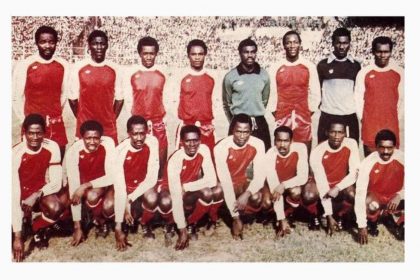
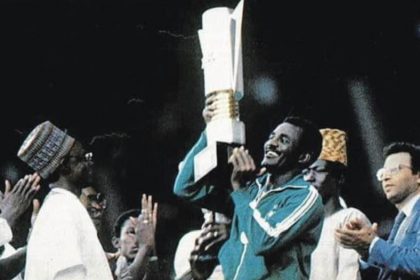
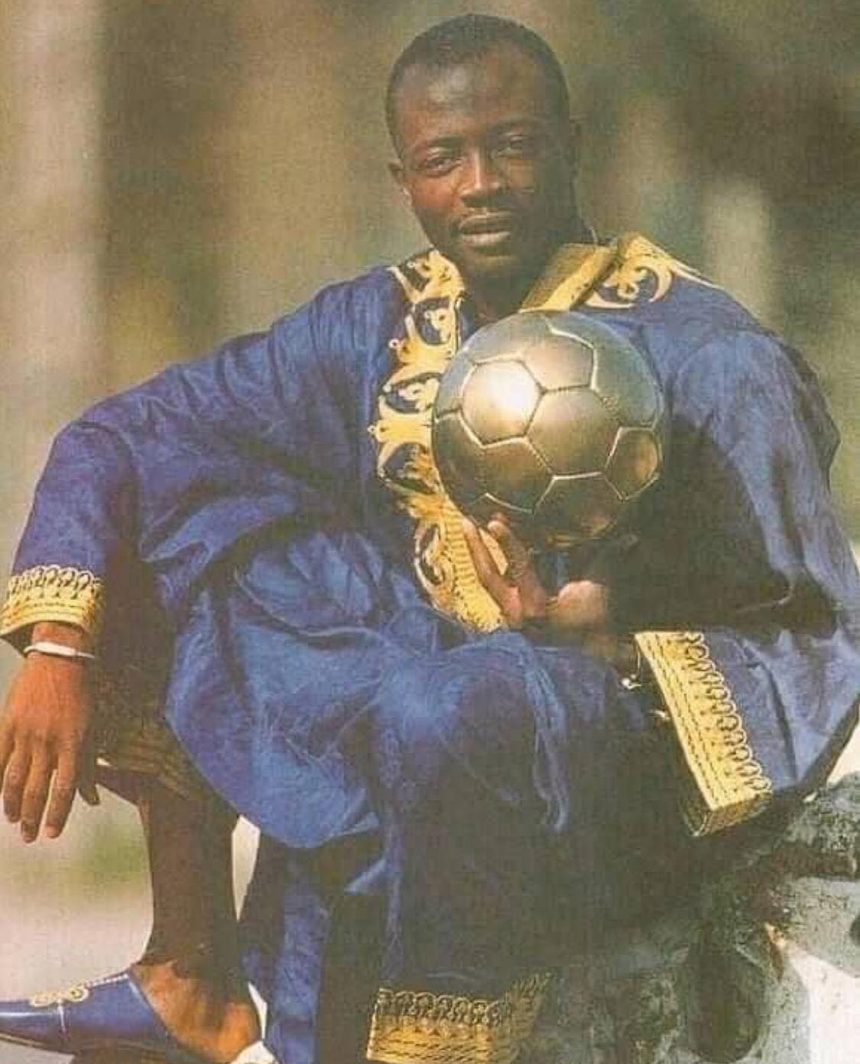
The Ayew dynasty started with Abedi Ayew Pelé who was a legend during his playing days, a three-time African footballer of the year award winner in 1991, 1992 and 1993. The highlights of his career were clearly in 1992 when he inspired the Black Stars to the AFCON final against Ivory Coast and 1993 when he won the UEFA Champions League in the colours of Olympique de Marseille FC of France. Though he was part of the Ghanaian side that won the AFCON 1982 but only as a fringe player.
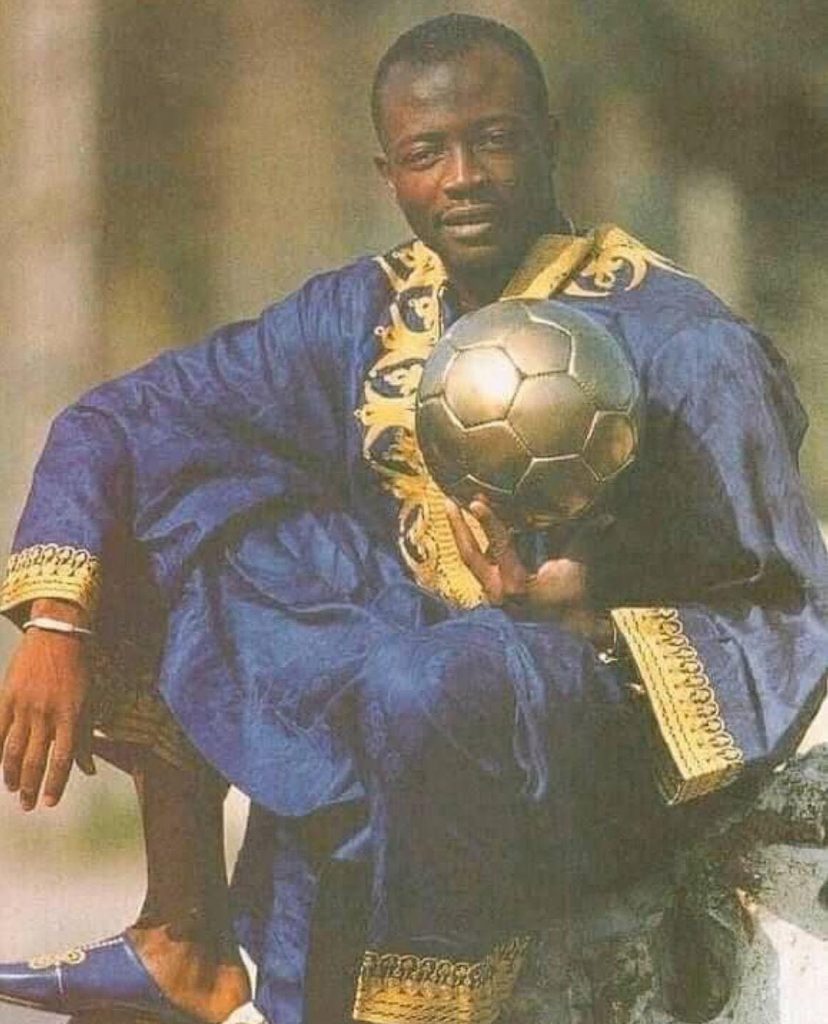
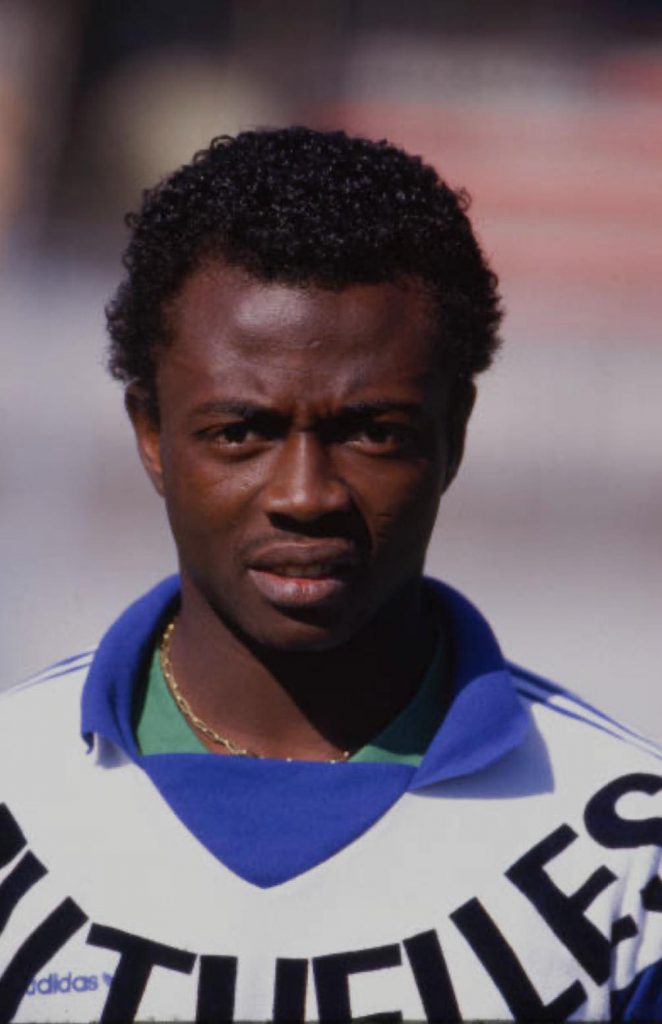
Abedi Pelé was born into a family in the town of Kibi on 5 November 1964 and grew up in the town of Dome at the northern outskirts of the city Accra.
He attended Ghana Senior High School in Tamale and he was the eldest of three brothers – Kwame and Sola. The other two also represented Ghana internationally like him too.
Six Ayews in total have played for the Ghana national men’s team, these include three sons of the legendary Abedi Pele himself who have played at the FIFA World Cup. The six have almost 400 international caps between them for the Black Stars and counting. Certainly the Ayews are an African football royalty.
Abedi Pelé was one of the early African players to be established in European club football. His nomadic career began with Real Tamale United in Ghana in 1978. He left Ghana after the 1982 African Cup of Nations to join Al Sadd in Qatar for a $1,000 transfer fee.
After stints with FC Zürich, Asante Kotoko and Hearts of Oak and AS Dragons FC de l’Ouémé in Benin – in and out of Africa. He eventually began his career fully in Europe with French side Chamois Niort, when he joined the French league’s division two side at the beginning of the 1986-87 season.
He later joined Olympique de Marseille the following season from here.
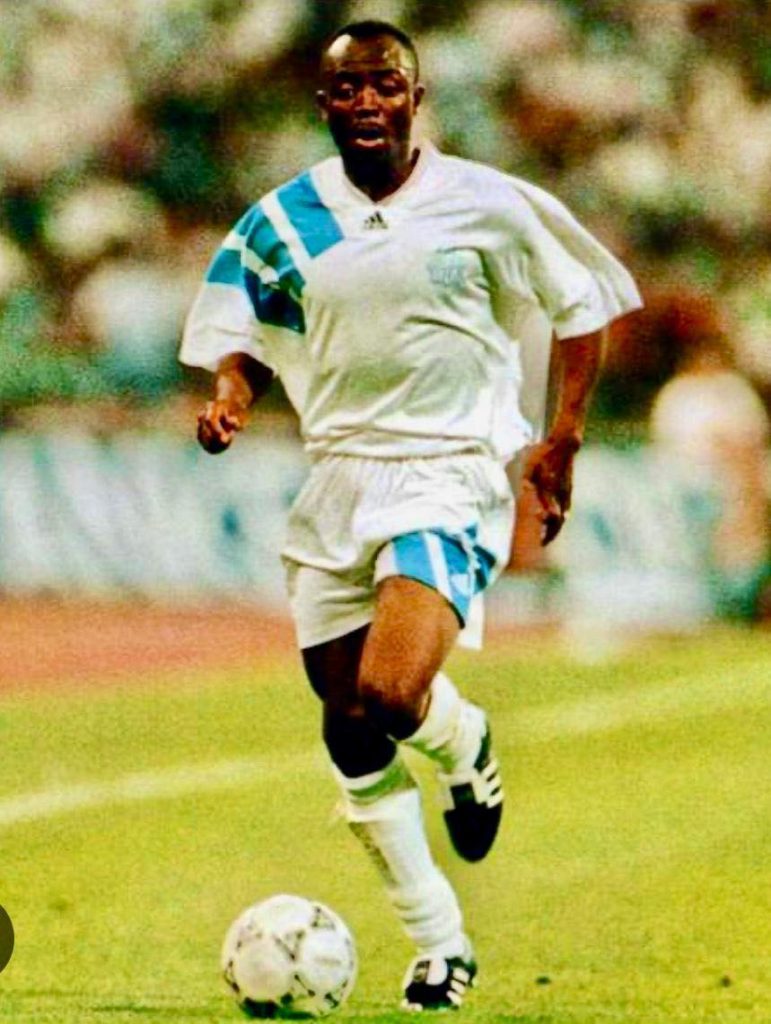
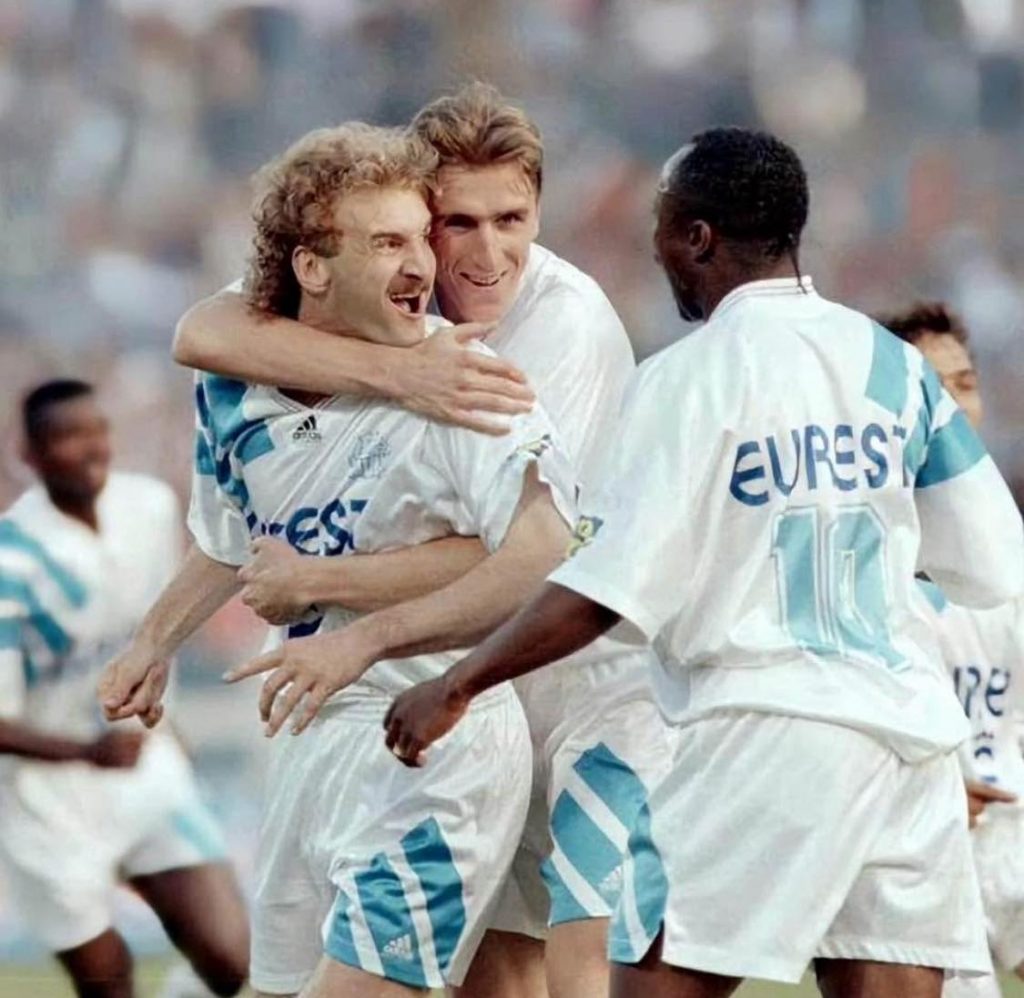
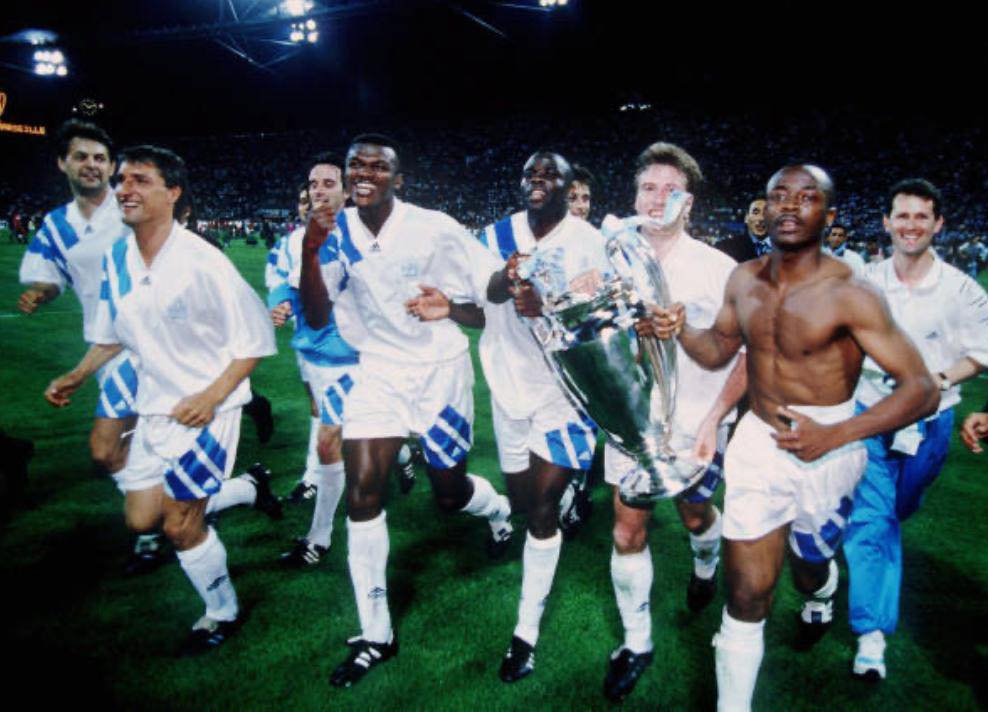
At Marseille Abedi Pelé reached the peak of his power and this was where the finest moments of his career occurred. He was one of the “Magical Trio” along with France’s prolific striker, Jean-Pierre Papin and Chris Waddle of England, spearheading perhaps one of Europe’s strongest club-sides of the early 1990s.
Pelé was the only remaining member of the trio still with the side when Marseille defeated Milan in the 1993 Champions League final in Munich, the first European Champions League title in the history of French football and the second didn’t come until 32 years later when PSG broke the jinx this summer.
Abedi Pele played for Ghana 73 times and scored 19 full international goals.
The 1992 Africa Cup of Nations was Abedi Pelé’s tournament. The Black Stars were hauled to the final by his genius and there were no other contenders for the Golden Ball, so dominant were his performances from start to (almost) finish.
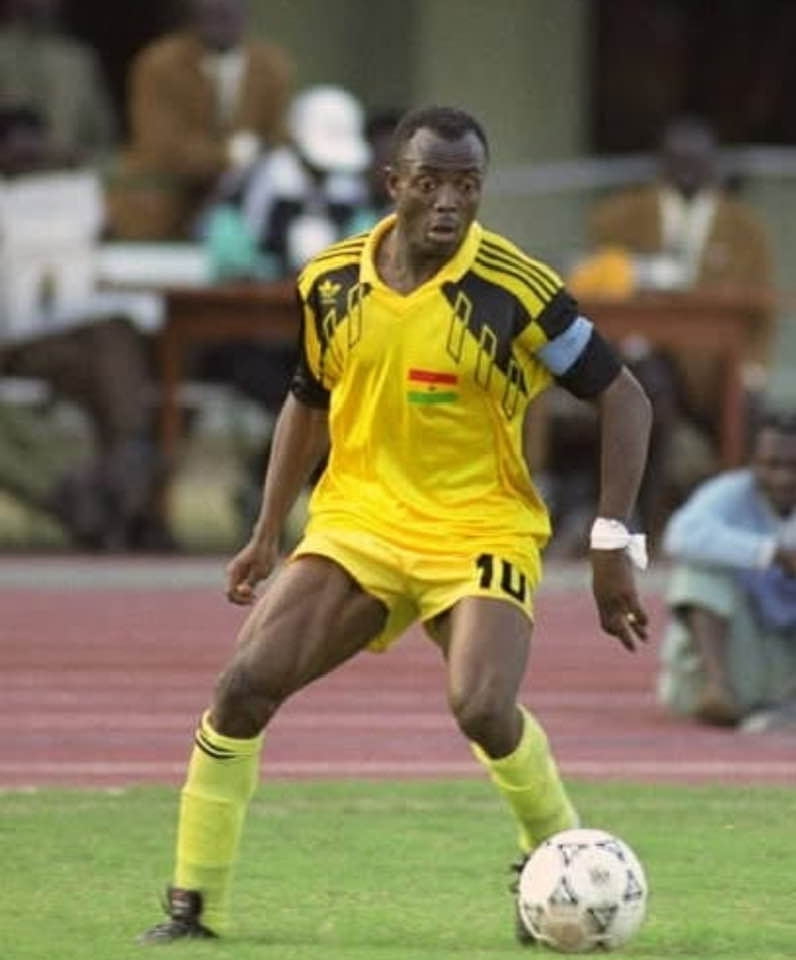
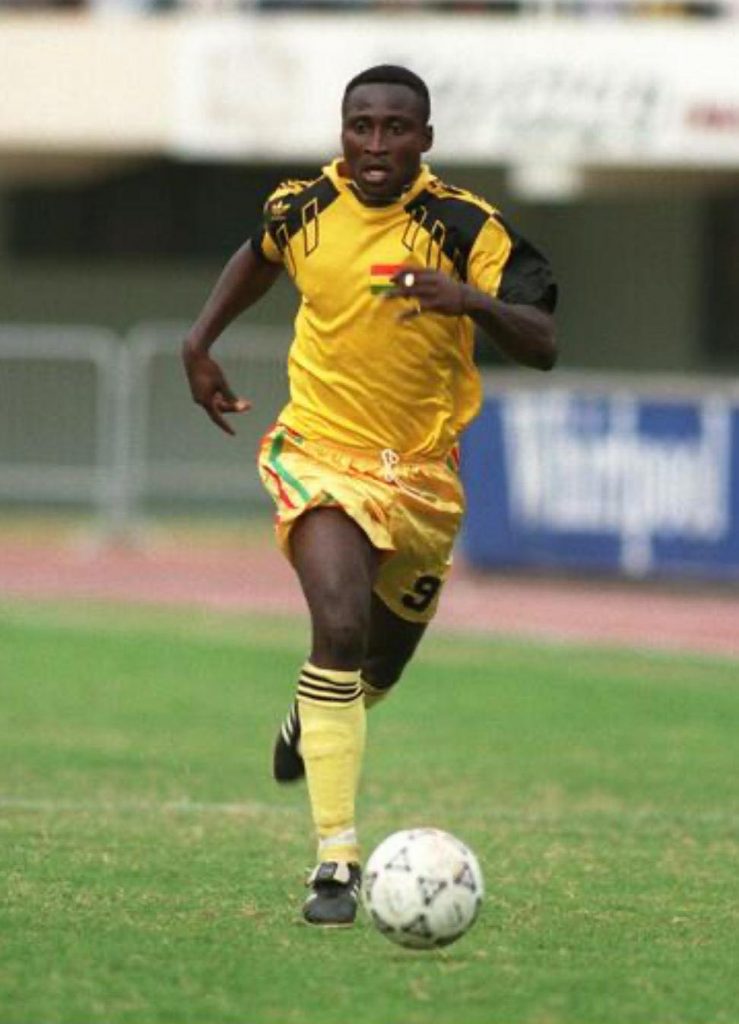
He got the only goal of the game in their opening win against Zambia, while a late Tony Yeboah goal against Egypt sealed Ghana’s passage to the quarter finals.
In the quarter finals, Abedi scored one of the greatest goals in the history of AFCON.
With with Ghana and Congo level at 1-1, Pelé picked up the ball in his own half around the hour mark and made a dazzling solo effort reminiscent of Maradona’s goal of the century against England in Mexico 86 World Cup.
This goal ended the contest in the Black Stars’ favour. It is still talked about in hushed tones today.
In the semis against Nigeria, Abedi turned in perhaps his most inspirational performance yet, scoring an impossible glancing header from a corner kick to cancel out Mutiu Adepoju’s opener and exhausting the Nigeria’s Super Eagles with his bottomless bag of tricks, the winner coming from the mercurial Prince Polley.
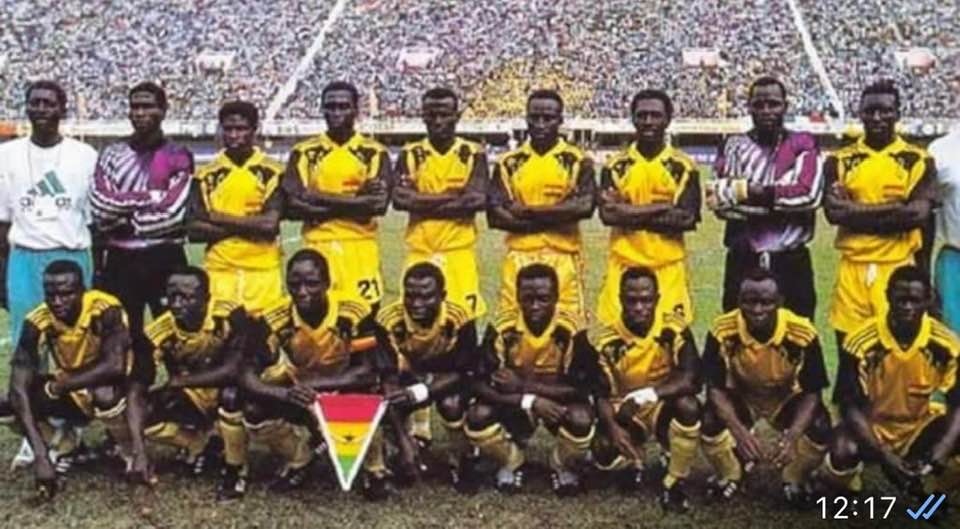
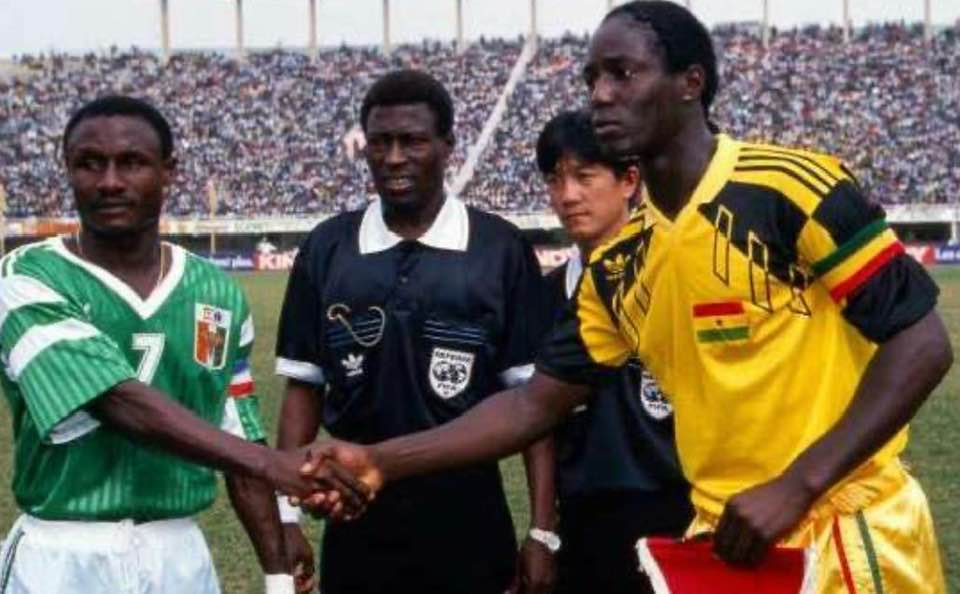
In the lead to this AFCON 1992 final, the German coach of the Black Stars made a bizarre decision that stunned football fans across the African continent. With substantive skipper Abedi Pelé ruled out of the match against Ivory Coast in the final due to accumulation of cards. Anthony Yeboah his deputy was supposed to be the automatic choice as captain but strangely the coach opted for the German-born Tony Baffoe.
It was a “captainship of Controversy”.
“Team handling is one of the most difficult duties of a football coach but in Ghana it’s a special situation because of ethnic thing, there are the Ashanti and the Ga-Adangbe people, Kumasi people and Accra people”, the Ghanaian AFCON 92’s coach Otto Pfister revealed in an interview 28 years later.
“So I thought to keep out this problem and maybe it was a mistake, but I gave Tony Baffoe the Captains armband because he was from Germany and he was out of this whole clan thing.”
This strange decision was also enhanced by the “political” tension between Abedi Pelé and his vice Yeboah.
Ghana went ahead to lose the match in a pulsating series of penalty kicks, but till date some still deny the controversy had little impact on the outcome of the epic match.
The experience of Coach Otto Pfister is so common in African football. In the choice of captains, ethnicity, intrigues, ego tussles among senior players are major issues.
Certain names transcend eras, etched not only in record books, but in the hearts of a continent. Among them stands Abedi Ayew ‘Pelé’, the Ghanaian icon whose brilliance lit up pitches from Accra to Marseille. But his story is only the beginning of a dynasty.
What followed is a rare phenomenon in African sport: a lineage where football is more than a profession, it’s a birthright. From siblings to sons, the Ayew family has carried the weight of legacy with both grace and grit, turning a single name into a symbol of continuity, excellence, and national pride. This is not just a story about talent passed down, but about a dynasty built, carefully, and deliberately on the shoulders of greatness.
Story edited by Niyi Akinola